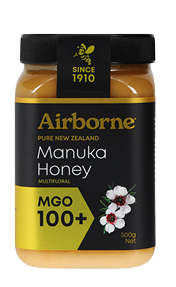
Airborne began commercial operations in New Zealand in 1910 and remains connected to its founding family. Its heritage is supported by decades of processing and laboratory experience.
Honey knowledge centre
Questions Answered.
Questions Answered.
Clearly and Honestly.
Everything customers commonly ask about Airborne Honey, batch testing, storage, packaging and Epoka Global ordering—kept inside one easy-to-use page.
Browse All Questions?
?
28Questions answered
4Useful categories
1Complete local resource
01
About Airborne Honey
Airborne focuses on three verifiable ideas: honest floral identification, checking that processing has not caused excessive heat damage, and batch-level traceability from the packed jar back through its supply records.
Availability in India depends on the active Epoka Global catalogue and imported stock. Current and upcoming Manuka formats are shown on the Products page.
Honest refers to pollen-based identification and retaining natural pollen. Undamaged refers to HMF testing as an indicator linked to heat and storage. Traceable means the batch code connects the jar to analytical and source records.
02
TraceMe, Pollen and Honey Testing
Find the batch code on the back label and enter it on Epoka Global’s TraceMe page. The available producer record is displayed directly inside this website without redirecting you elsewhere.
Airborne documents its standard code as YYWWDB, normally six digits. Some live producer records use a seven-digit number, so Epoka Global accepts both formats to avoid rejecting a genuine jar code.
Pollen analysis helps identify the floral sources visited by bees. Airborne measures target pollen and total pollen because natural honey normally contains pollen from more than one plant available around the apiary.
Total pollen records the number of pollen grains measured per 10 grams of honey. It helps show that pollen has not been removed through excessive filtration.
HMF is a compound used as an indicator of heating and storage changes in honey. Its level generally rises with greater heat exposure and age, so a lower result is normally preferred.
MGO means methylglyoxal, a measured compound used to grade certain Manuka honey products. The MGO number on a product label refers to its stated methylglyoxal level.
UMF is a trademarked grading system managed by an industry association. It is not itself a New Zealand government standard. Airborne uses its own product labelling and batch verification approach.
The word raw does not define a precise and measurable heat threshold. Pollen retention and HMF results provide customers with clearer evidence about filtration and heat-related quality changes.
03
Ordering and Delivery in India
Orders are intended for delivery within India wherever the selected courier serves the entered pincode. Final availability, charges and estimated time are shown during checkout.
Delivery depends on the Indian courier and the address serviceability check. A complete street address and reachable mobile number are recommended.
The estimate depends on stock, destination, public holidays and courier capacity. Use the timeline shown during checkout or in your order confirmation rather than New Zealand delivery estimates.
Tracking is shared after the parcel has been handed to the courier and scanned into its network. Use the email address and mobile number entered during checkout.
A cancellation may be possible before packing or dispatch. Once the parcel is processed or shipped, the applicable Epoka Global cancellation and return conditions apply.
Yes. Retail orders can be placed through the shop. Distributors, selling partners, bulk buyers and corporate-gifting customers can use the Partner With Us enquiry form.
Packaging can vary by shipment and courier. Follow the recycling label on each material and separate clean recyclable components where local facilities accept them.
04
Storage, Use, Packaging and Safety
Worker bees may live around six weeks during the busy honey season and longer during winter. Queen bees can live for several years, although their practical lifespan varies.
Airborne’s guidance distinguishes between creamed and liquid honey: creamed honey is commonly kept around 14°C, while liquid honey is generally kept around 20–22°C. Always prioritise the pack label and avoid excessive heat.
Crystallisation is natural and is influenced by glucose content, floral variety, temperature and time. It does not automatically mean the honey is spoiled.
Airborne states that its plastic jars use PET and are BPA-free. PET is lightweight and widely recyclable, but customers should check local recycling rules and the current pack label.
Honey can be used as a spread, stirred into tea or coffee, added to breakfast, baking, marinades and many other recipes. Avoid exposing it to unnecessary high heat when its delicate flavour is important.
Pure honey does not naturally contain gluten. Customers with allergies or coeliac disease should still check the complete label and cross-contact information for the specific packaged product.
No. Honey should not be given to children under 12 months because of the risk of infant botulism.
Properly stored honey is highly stable and may remain usable beyond its best-before date, but always inspect the seal, label, smell and condition and follow the printed date and storage instructions.
Subscription availability depends on the products and plans currently active on Epoka Global. Check the Subscription page for eligible items and delivery frequency.
Have a jar with you?